


Beyond Colour Coding: Why BICSc is a Strategic Asset in Facilities Management
When people who know and hear about BICSc, the British Institute of Cleaning Science, the first thing that usually comes to the mind is, the colour coding system. Red for restrooms, blue for general areas, green for kitchens. A simple yet effective tool used globally in the cleaning industry. But limiting BICSc to just colour coding underestimates its true value.
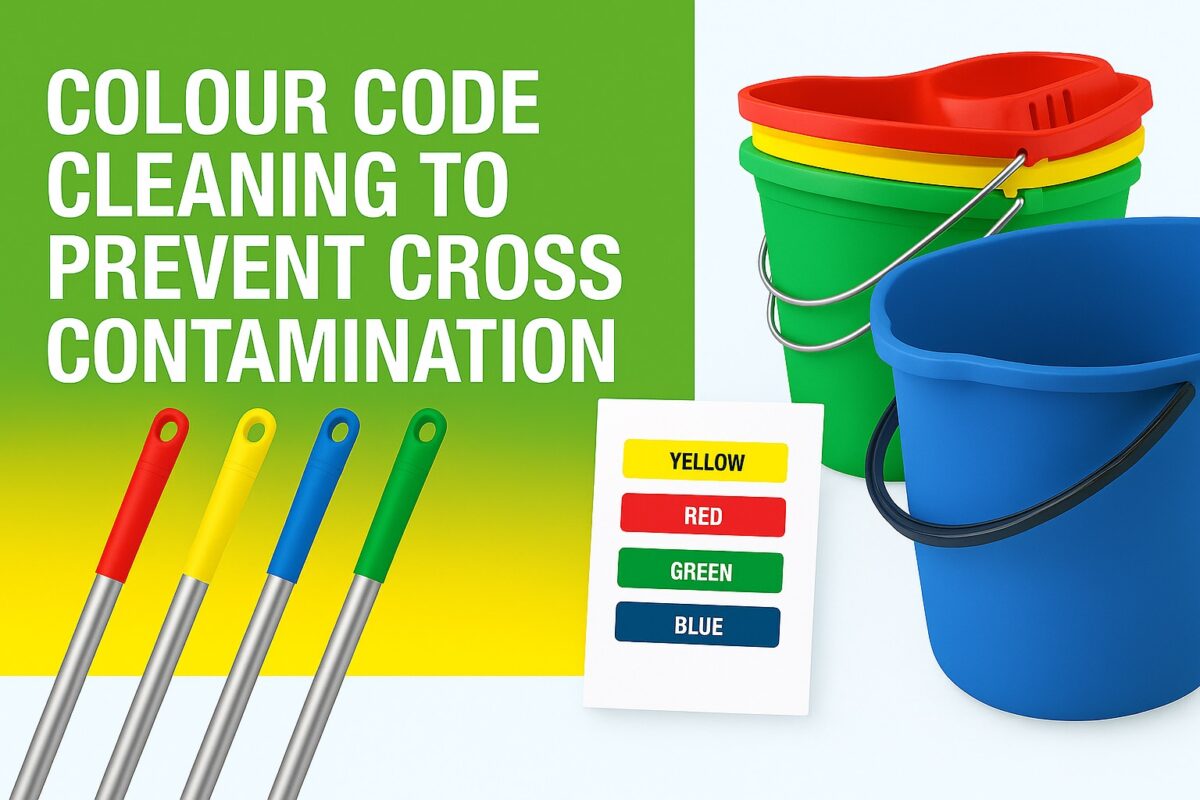
In today’s facilities management world, “cleaning” is no longer a back‑of‑house task, it is a strategic function that directly impacts the facilities safety, compliance, customer perception, and cost efficiency. But the British Institute of Cleaning Science (BICSc) reframes cleaning as a strategic discipline. Far beyond its familiar colour‑coding system, BICSc delivers a holistic framework of standards, productivity benchmarks and training that elevates soft services to the same level we apply to technical systems and turns it into a data driven discipline, backed by globally recognized standards and best practices.
Defining a Professional Standard
At its core, BICSc is a globally recognised authority setting professional cleaning standards. It is the largest independent professional and educational body in the cleaning industry, recognized around the world for establishing best-in-class standards and training programs (BICSc, 2025). It does not stop at certifying individuals; it also provides a full suite of task‑based training systems, standardized operating procedures and clear output measures. So whether you are managing a hospital, an airport, shopping mall, a corporate head office or BPO, BICSc brings structure, safety and consistency to your daily operations (BICSc, 2025)
Smart, Data‑Driven Bidding
Winning an FM cleaning contracts relies on providing defensible and transparent proposals. BICSc empowers cleaning service providers with productivity benchmarks, such as estimating how many square meters can be efficiently cleaned per hour for routine cleaning etc., and zone‑based classifications that translate square meters into accurate Full‑Time Equivalent (FTE) requirements (Tomorrows Cleaning, 2025). By breaking projects into defined cleaning zones, assigning task durations and applying standard rates, bid proposals become data‑backed and competitive.
Operational Excellence in Practice
Once a contract is secured, BICSc’s impact becomes even more noticeable. Cleaning schedules are no longer ad hoc; they follow a clear cadence of daily, weekly, and reactive tasks. Each zone in a building carries its own risk profile and its own cleaning specification, thus ensuring that hospital wards, mall food courts, or executive suites receive exactly the right level of attention. Colour coding remains a useful visual tool, but behind every colour hue lies a defined procedure, a required duration, and a quality check.
SOPs that Drive Performance
Perhaps the greatest advantage of BICSc lies in its approach to standard operating procedures. Every SOP is crafted with task duration, tool selection, PPE requirements, and even chemical dilution ratios all spelled out. These are not static documents locked in filing cabinets; they are living assets ready for integration with digital CAFM/CMMS platforms. Frontline teams can access step‑by‑step guidance on PDAs/tablets, supervisors can audit performance in real time, and managers can analyse compliance data to drive continuous improvement.
Sustainability and Safety Built In
Finally, BICSc embeds sustainability and safety into the fabric of cleaning operations. By prescribing proper chemical dilutions, minimizing waste, and enforcing safe‑handling protocols, it helps FM departments reduce environmental impact while safeguarding staff and occupants. The result is a cleaning program that is not only cost‑effective but also aligned with modern ESG commitments.
Why it all maters?
Today, cleaning does not just keep a facility running, it sets the tone for every customer’s first impression and directly impact your overall performance. BICSc helps shift cleaning from a behind-the-scenes task to a front-line advantage. It gives facilities managers the tools to submit credible, data-driven proposals, maintain consistent service standards, and track real results. The outcome is that “Cleaning” stops being just another cost to control and becomes a true strategic asset.
If your FM strategy still sees cleaning as something to cut back on, it might be time to rethink your approach and see what BICSc can really bring to the table. Contact us for more information about BICSc training and how to transform your cleaning operations.