
Smarter HVAC and Building Systems for Improved Facility Performance with Rite Products
Facilities managers are increasingly expected to improve building performance while balancing energy consumption, operating costs, occupant comfort, safety, and equipment reliability. HVAC and building control systems play an important role in achieving these objectives, particularly in commercial, institutional, and industrial facilities.
From maintaining comfortable indoor conditions to monitoring energy use and detecting potential building issues, engineering systems are an essential part of day-to-day facilities management. Effective operations and maintenance, combined with appropriate controls and modernization strategies, can help facilities improve performance and extend the useful life of existing assets.
The Role of HVAC in Building Performance
HVAC systems account for a significant portion of energy consumption in many buildings. Their performance also directly affects occupant comfort, indoor air quality, equipment reliability, and overall building operations.
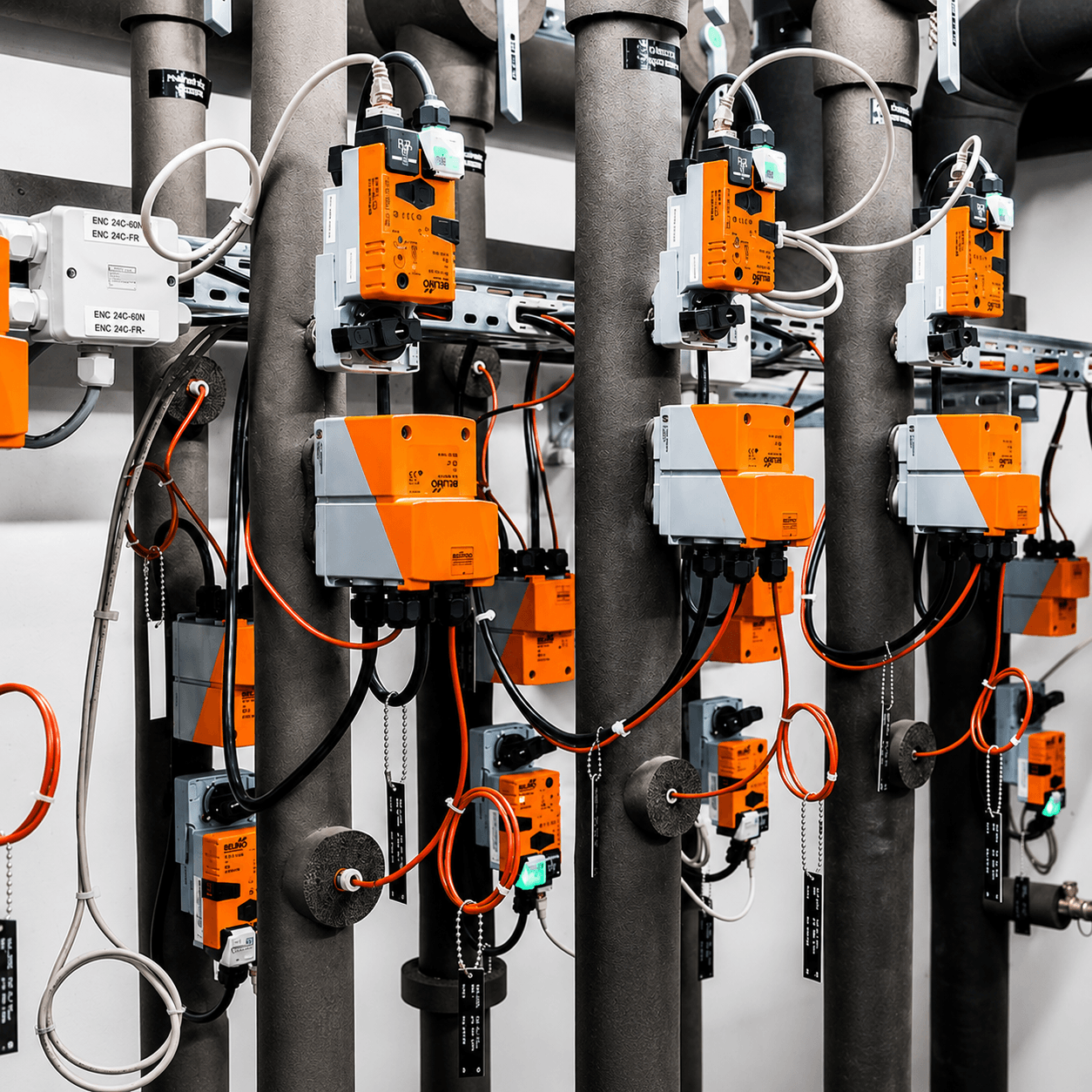
Proper maintenance and effective controls help ensure that cooling and ventilation systems operate according to actual building requirements. Technologies such as actuators, control valves, sensors, and meters can provide facilities teams with greater control and visibility over HVAC performance.
When integrated with building automation systems, these technologies can also provide useful operating data for monitoring conditions, identifying inefficiencies, and making better-informed maintenance and energy-management decisions.
Improving Existing HVAC Systems
Improving HVAC performance does not always require replacing an entire system.
Retrofitting allows facilities to introduce newer controls, sensors, valves, and other technologies into existing HVAC infrastructure. Depending on the condition and configuration of the equipment, this approach can improve efficiency and system performance while extending the useful life of existing assets.
Regular HVAC operations and maintenance (O&M) remains equally important. Preventive maintenance, inspection, system monitoring, and timely corrective work can help identify developing problems, reduce unexpected equipment failures, and maintain efficient operation over time.
Managing Building Energy Consumption
Energy efficiency is an increasingly important consideration for facilities teams, both from an operational and sustainability perspective.
For HVAC systems, opportunities for improvement may include equipment scheduling, temperature settings, water and airflow control, sensor accuracy, equipment condition, and matching system operation with actual building demand.
Modern controls and monitoring devices can provide facilities managers with better information about how their systems are performing, helping them identify areas where energy may be unnecessarily consumed and where operational adjustments can be made.
Indoor Air Quality and the Building Environment
Building performance involves more than temperature control. Indoor air quality is an important consideration in maintaining healthy and comfortable environments, particularly in buildings with high occupancy or enclosed spaces.
Proper ventilation, monitoring, and control can help maintain appropriate indoor conditions. Sensors and building controls can provide facilities teams with information about changing environmental conditions and allow ventilation systems to respond accordingly.
Detecting and Preventing Water Leaks
Undetected water leaks can result in water loss, property damage, equipment damage, and operational disruption.
Leak detection systems monitor water flow and other system conditions to identify possible abnormalities. Depending on the system configuration, they can alert building operators or automatically shut off water flow when a potential leak is detected.
Early detection allows facilities teams to respond before a relatively small problem develops into a more significant building issue.
Chilled Water System Control
Chilled water systems are widely used for cooling larger commercial and institutional buildings. Maintaining appropriate water flow and differential pressure is important to their efficient operation.
In variable-flow applications, chilled water bypass control helps maintain the operating conditions required by the system. Properly designed controls can contribute to more stable HVAC performance while helping facilities optimize energy use.
Supporting Fire and Life Safety
Building engineering systems also have an important role in emergency preparedness.
Stairwell pressurization systems, for example, are designed to maintain positive pressure within designated fire-exit stairwells. During a fire, this helps limit smoke infiltration into evacuation routes.
For high-rise facilities in particular, proper inspection, operation, and maintenance of these systems form an important part of the building’s overall fire and life-safety strategy.
Gas Detection in Car Parks and Enclosed Spaces
Underground car parks, mechanical areas, and other enclosed spaces may be vulnerable to the accumulation of harmful or combustible gases.
Gas detection systems use sensors and controllers to monitor substances such as carbon monoxide, nitrogen dioxide, methane, hydrogen, ammonia, refrigerants, carbon dioxide, and volatile organic compounds (VOCs).
When connected to ventilation systems, gas detection can help facilities respond to potentially unsafe conditions while allowing ventilation equipment to operate according to actual requirements.
Applying Building Engineering Solutions in Philippine Facilities
Effective facilities management requires more than installing individual technologies. Building systems need to be properly designed, maintained, monitored, and integrated to achieve improvements in reliability, efficiency, safety, and occupant comfort.
Rite Products Incorporated has been providing engineering supplies and services in the Philippines since 1996, supporting building owners, facilities managers, maintenance engineers, and other building professionals. Over the years, the company has worked across shopping malls, hotels, hospitals, schools, offices, manufacturing facilities, and other facilities nationwide.
Its areas of specialization include HVAC operations and maintenance, HVAC retrofit solutions, building energy-saving solutions, indoor air quality systems, leak detection systems, chilled water bypass control, stairwell pressurization, and toxic and combustible gas detection systems.
Rite Products has also been a Belimo distributor in the Philippines since 1998. Belimo provides actuators, control valves, sensors, and meters for the control and monitoring of HVAC systems. These field devices can support more accurate system control, energy management, and integration with building automation systems.
For facilities managers, the objective is ultimately not technology for its own sake, but better building performance. Combining appropriate engineering solutions with effective operations and maintenance can help facilities manage energy consumption, improve reliability, maintain safe and comfortable environments, and make better use of existing building assets.
To learn more about Rite Products, Inc. and its HVAC, building controls, and engineering solutions, visit the Rite Products website.